
Attics, basements, and garages
Temperature swings and humidity fluctuations accelerate fabric degradation and create conditions for mold and mildew. A climate-stable interior closet is far better.
Wedding dress preservation
Your gown is more than fabric. It is the dress, the detail, and the day itself. Foxboro Dry Cleaners gives it careful, professional preservation without the boutique markup; serious gown care, competitively priced, right here in Foxborough.
Why preservation matters
Wedding gowns often collect residue that is not obvious right away. Clear drinks, perspiration, makeup, body oils, and floor soil can settle into delicate fabric and become much harder to address months later.
What to avoid
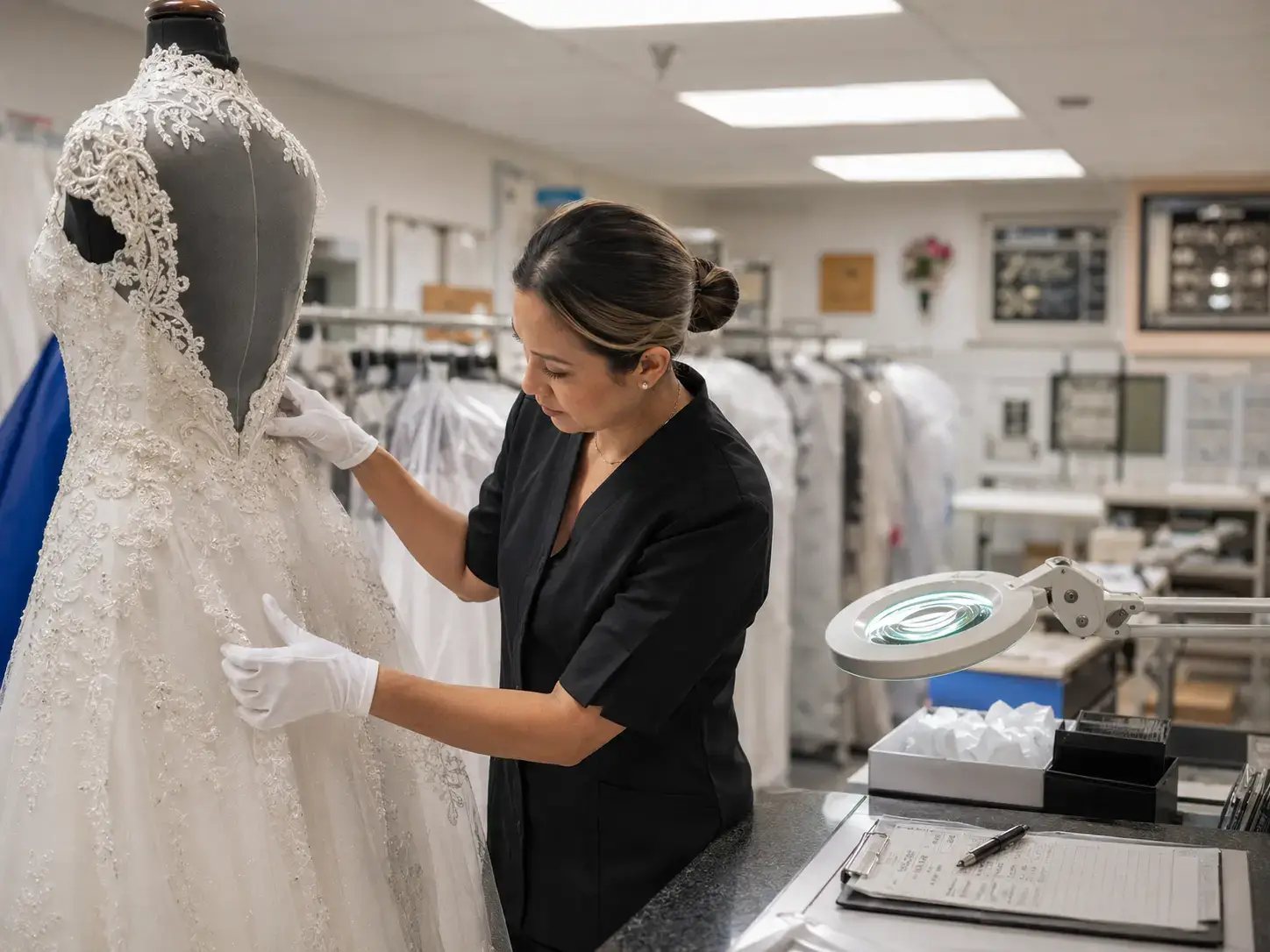
Most gown damage happens between the wedding and the first inspection. These are the situations we see most often.
Temperature swings and humidity fluctuations accelerate fabric degradation and create conditions for mold and mildew. A climate-stable interior closet is far better.
Dry cleaner plastic traps moisture and causes yellowing. Standard cardboard is acidic and transfers discoloration directly to delicate fabric over time.
Clear stains from champagne, perspiration, and body oils are easiest to address right after the wedding. Left too long, they oxidize and set permanently into the fiber.
Beading adhesives, lace, and specialty fabrics can be permanently damaged by home cleaning products and water. When in doubt, bring it in untouched.
The weight of a full gown stresses the shoulder seams and bodice fabric over months. Gowns should be stored flat or folded with proper support, not hanging.
Skin oils transfer easily to delicate fabrics. Every time the gown is handled bare-handed, residue is deposited that can cause long-term discoloration.
Our process
Bridal garments are not ordinary dry cleaning. The right approach depends on the dress construction, trims, stains, and how the gown will be stored afterward.
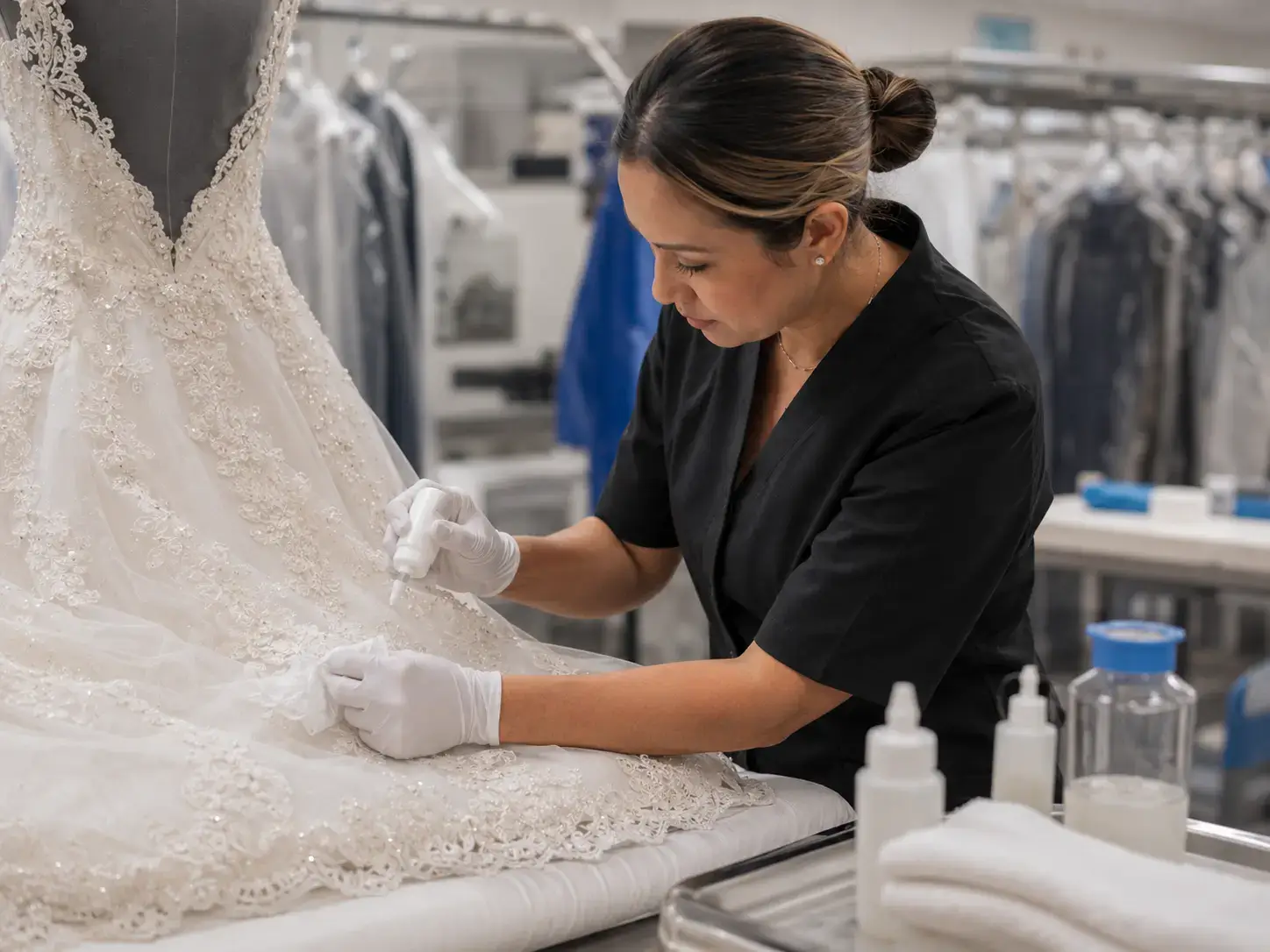
We review the gown, fabric, labels, beading, lace, train, hem, and known spills before any cleaning decisions are made.
We look for residues from perspiration, clear drinks, makeup, food, and floor contact that may not be obvious in normal closet lighting.
Problem areas are addressed carefully by hand, with special attention to hems, bodices, underarms, and delicate embellishments.
The cleaning method is selected around the gown itself, including fiber content, construction, adhesives, sequins, beadwork, and trims.
After finishing, the dress is prepared for long-term storage with acid-free materials that help reduce yellowing, creasing, and handling damage.
Long-term storage
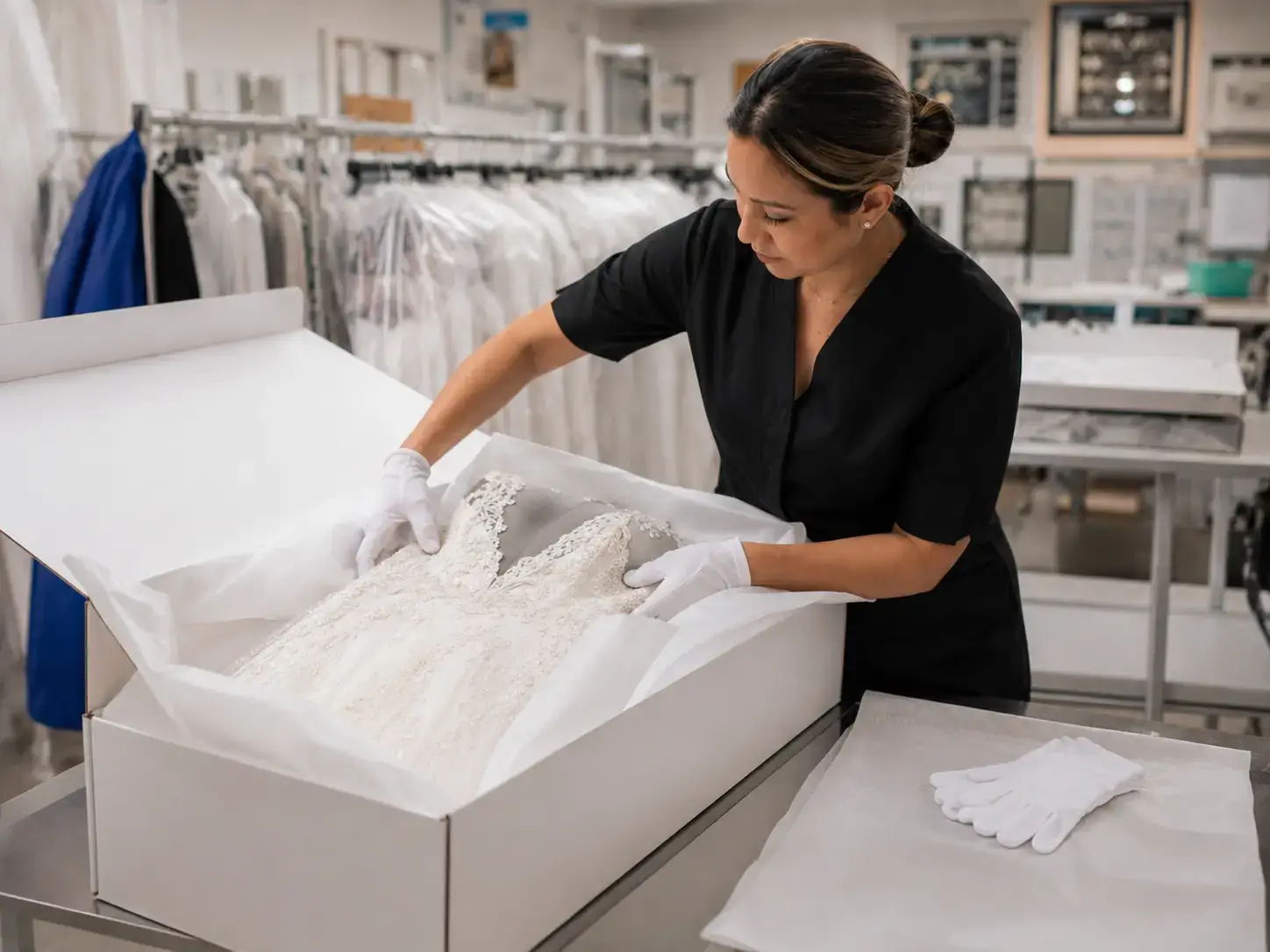
Preservation is about what happens after the gown leaves the counter. The goal is to reduce exposure, handling damage, fiber stress, and material transfer while the dress is stored.
Acid Free Packaging should avoid ordinary cardboard and tissue that can discolor delicate fabric over time.
The gown is arranged to avoid harsh creases that can weaken fabric during long-term storage. Preservation boxes are matched to the size of the dress for proper support.
Limiting direct handling helps keep skin oils and everyday residue away from the preserved gown.
What you receive
No hidden steps, no upsells. Bring the full bridal story with you: something borrowed, something blue, something old, something new, plus your tiara, gloves, veil, scarves, or other keepsakes you want reviewed with the gown.
We review the entire gown, fabric type, construction, embellishments, labels, hem condition, beading, lace, and any staining or damage you’re aware of, before any cleaning decisions are made.
We focus on the areas most likely to carry invisible residue: the bodice, underarms, hemline, train, and anywhere food, drink, or outdoor contact occurred during the reception.
Identified areas are worked by hand before the gown enters any cleaning process; particular care is taken around beading, lace seams, and decorative elements that can be damaged by aggressive treatment.
The cleaning process is selected around the specific gown; fiber content, trims, adhesives, sequins, silk, organza, lace, and tulle all behave differently and require different handling.
The cleaned gown is finished and pressed carefully, with attention paid to delicate embellishments. Finishing quality determines how the dress looks and how well it folds for long-term storage.
The finished gown is packaged in materials chosen to minimize yellowing, fiber stress, and handling damage, so when the box is opened years from now, the gown reflects the care that was put into it.
Bring it in for an inspection or call first if the dress has delicate trim, heavy staining, or older discoloration.
Before you visit
The more context we have, the better we can inspect the gown and explain the right care path.
Champagne, clear soda, makeup, food, and outdoor contact all matter, even if you cannot see the stain now.
Bring veils, belts, detachable trains, or fabric accessories so they can be reviewed with the gown.
The sooner the dress is inspected, the better the opportunity to address invisible residue before it ages into the fabric.
Common questions